


Project description
The L-TRANS SERVICE Candy Bar Production Line is a modern integrated solution designed for the continuous production of a wide range of confectionery products with consistent quality and high productivity.
The line provides a complete production cycle — from confectionery mass preparation to forming, cooling, cutting, optional enrobing, and transfer of finished products to the packaging stage.
What Types of Bars Can Be Produced?
Our production lines enable the manufacture of a wide range of products:
• protein bars; • fitness bars; • energy bars;
• cereal bars, muesli bars; • flake bars; • chocolate bars;
• fruit bars; • fruit-protein bars; • honey and nut bars;
• caramel bars; • nut and seed bars; • double-layer and multi-layer bars;
• brittle bars (kozinaki); • soft and hard nut brittle; • enrobed and non-enrobed products.
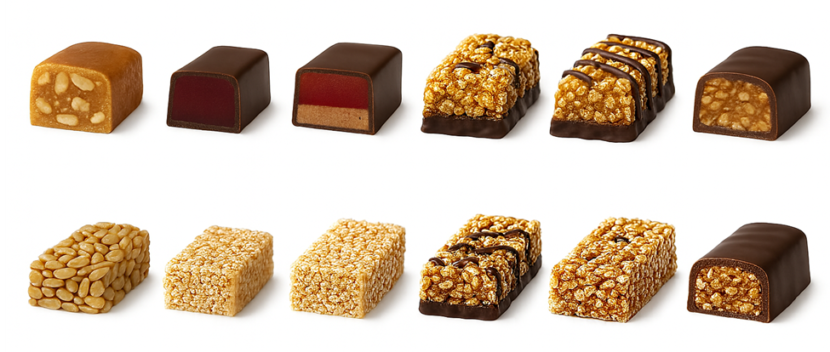
Depending on the recipe, products can be manufactured with one or multiple layers, with or without filling, and with full or partial enrobing.
Raw Materials and Ingredients
The equipment is designed to process a wide range of raw materials:
• protein blends; • whey and plant proteins; • nuts;
• peanuts; • almonds; • hazelnuts;
• sunflower seeds; • sesame seeds; • pumpkin seeds;
• cereals and flakes; • puffed rice; • dried fruits;
• fruit concentrates; • fruit purees; • honey;
• sugar syrups; • fruit syrups; • caramel;
• nougat, toffee; • chocolate; • confectionery coatings.
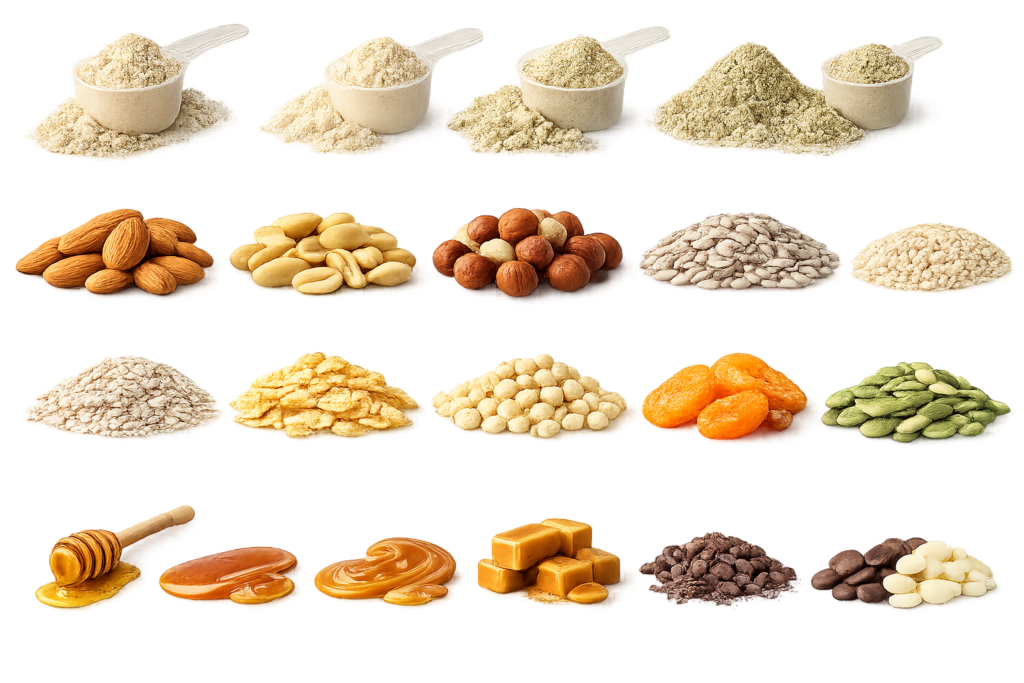
This versatility enables manufacturers to respond quickly to market trends and expand their product portfolio.
Protein Bars
Protein bars are one of the fastest-growing segments of the functional food market. They are highly popular among athletes, active lifestyle consumers, and people seeking balanced nutrition.
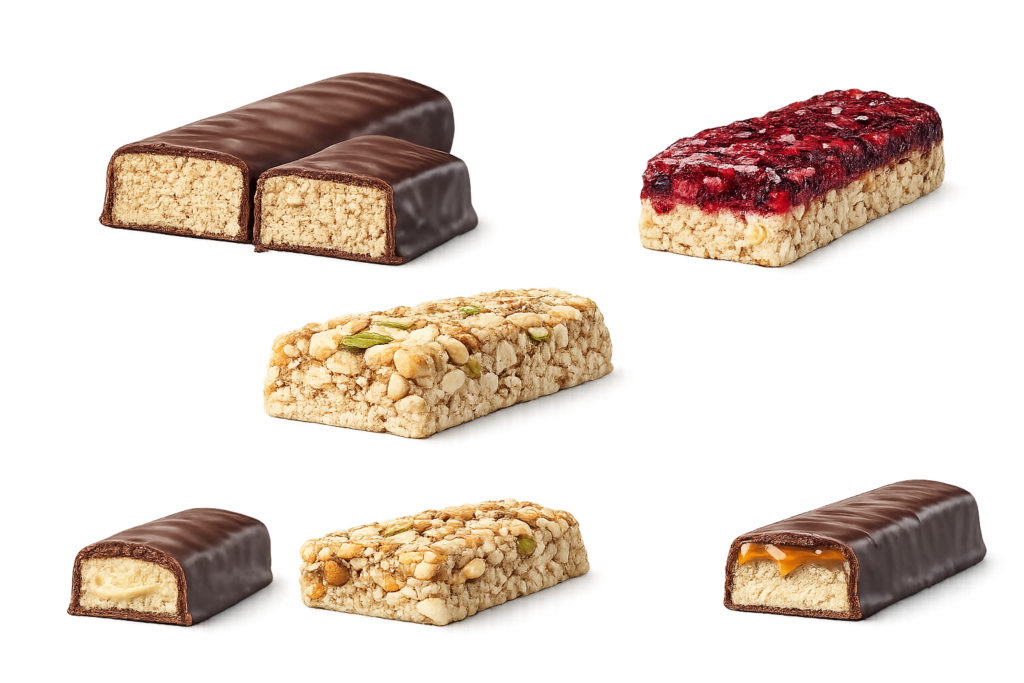
L-TRANS SERVICE equipment can produce:
- classic protein bars;
- fruit-protein bars;
- multi-layer protein bars;
- filled protein bars;
- chocolate-coated protein bars.
The formulation may include protein blends, nuts, dried fruits, dietary fiber, syrups, flavorings, and functional ingredients.
Cereal and Muesli Bars
Cereal bars remain highly popular due to their natural ingredients and high nutritional value.
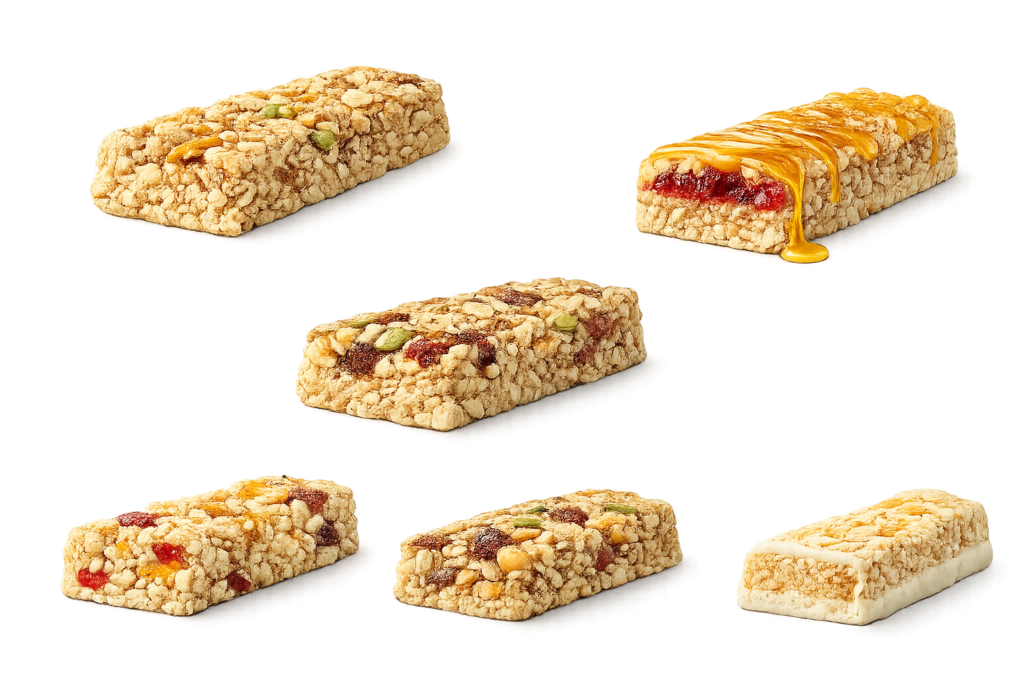
Typical ingredients include:
- oat flakes;
- corn flakes;
- puffed rice;
- cereal blends;
- seeds;
- nuts;
- dried fruits.
Sugar syrups, honey syrups, fruit syrups, caramel, and fruit concentrates are used as binding agents.
Energy Bars
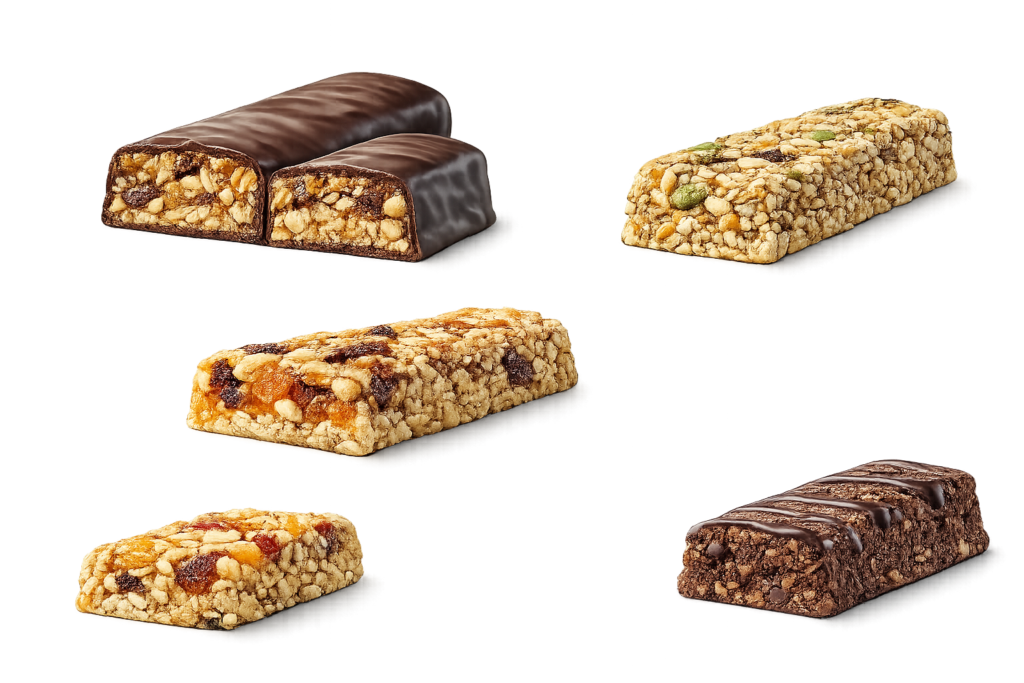
Energy bars combine high caloric value, nutritional benefits, and convenience. They may contain cereals, proteins, nuts, seeds, dried fruits, and other functional ingredients.
The production technology makes it possible to manufacture products with various textures, structures, and flavor profiles according to market requirements.
Fruit Bars
Fruit bars are produced using fruit concentrates, fruit purees, dried fruits, and natural fillings.
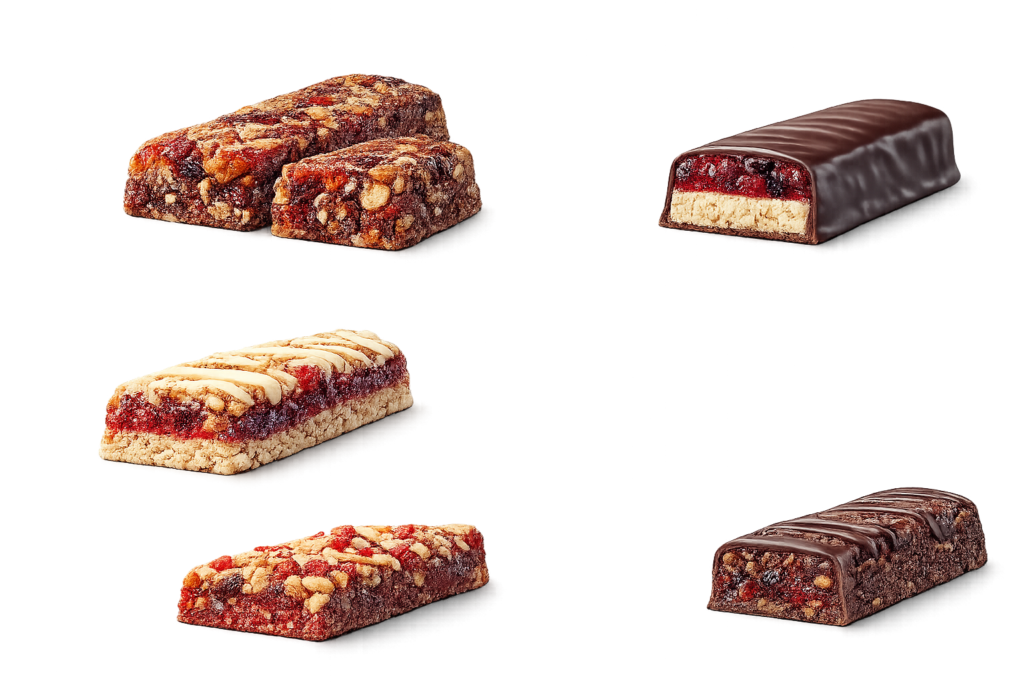
The line can manufacture:
- fruit bars;
- fruit-protein bars;
- multi-layer bars with fruit layers;
- chocolate-coated fruit bars.
These products are especially popular among consumers who prefer natural foods.
Caramel Bars, Kozinaki, and Nut Brittle
The line enables the production of a wide range of confectionery products based on caramel, nougat, and syrups:
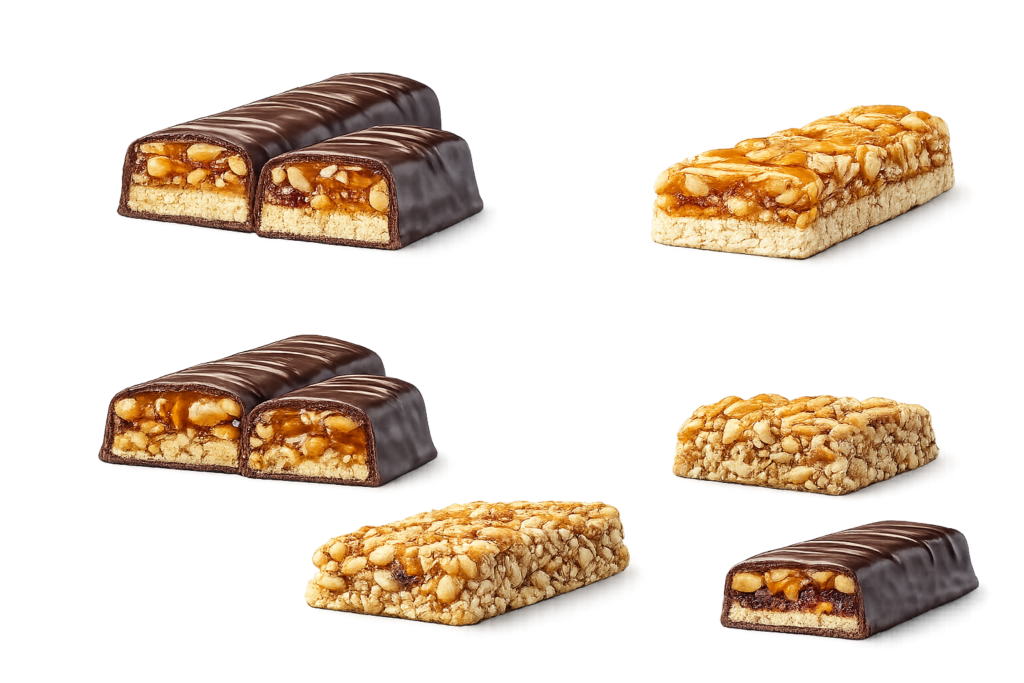
- caramel bars;
- nougat bars;
- caramel and nut bars;
- kozinaki;
- soft nut brittle;
- hard nut brittle.
Products can also be coated with chocolate or confectionery coating.
Double-Layer and Multi-Layer Bars
One of the key advantages of the equipment is its ability to manufacture bars with complex structures.
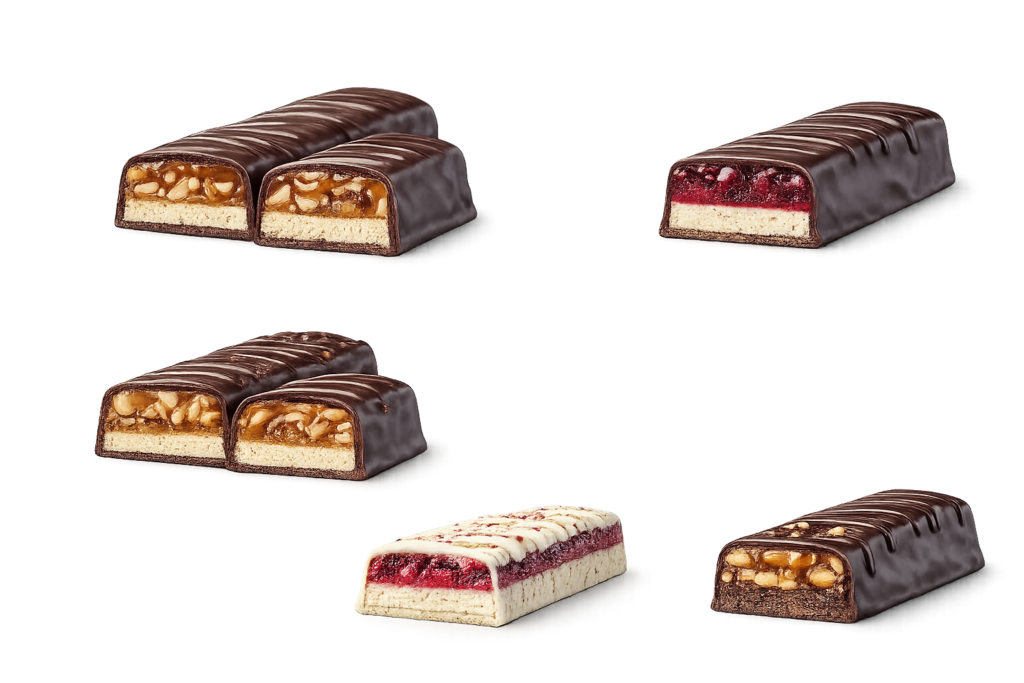
Additional layers may include:
- caramel layer;
- jelly layer;
- fruit layer;
- cream layer;
- nougat layer.
Multi-layer products enable manufacturers to create unique flavor combinations and broaden their product range.
LINE CONFIGURATION
The Candy Bar Production Line consists of a set of interconnected processing sections operating as a single automated system to provide a complete production cycle.
- Confectionery Mass Preparation Section
This section is designed for preparing syrups, caramel, jelly, fruit, and protein masses according to the recipe.
It includes cooking vessels, storage tanks, a piping system, pumps, and dosing units.
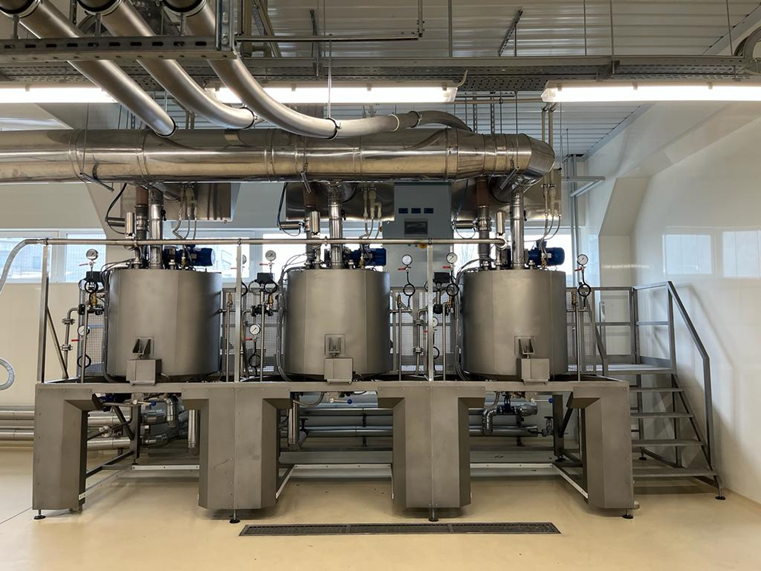
Main functions:
- preparation of various confectionery masses;
- precise control of temperature, level, and ingredient weight;
- automatic product transfer to the production line;
- dosing of colorants, flavorings, and acids directly into the production process;
- homogeneous mixing of ingredients.
The equipment is manufactured from AISI 304 stainless steel and complies with food industry requirements.
- Mixing and Feeding Section
At this stage, the prepared mass is mixed with dry ingredients such as nuts, cereals, puffed rice, dried fruits, or protein components.
The system ensures homogeneous mixing and stable feeding of the mixture to the forming unit.
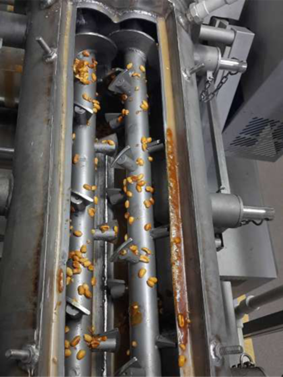
Functional features:
- continuous or batch mixing;
- uniform coating of ingredients with syrup or caramel;
- adjustable mixing speed;
- conveyor feeding of the mixture to the forming section.
The system can process a wide range of formulations, from light cereal blends to dense protein compositions.
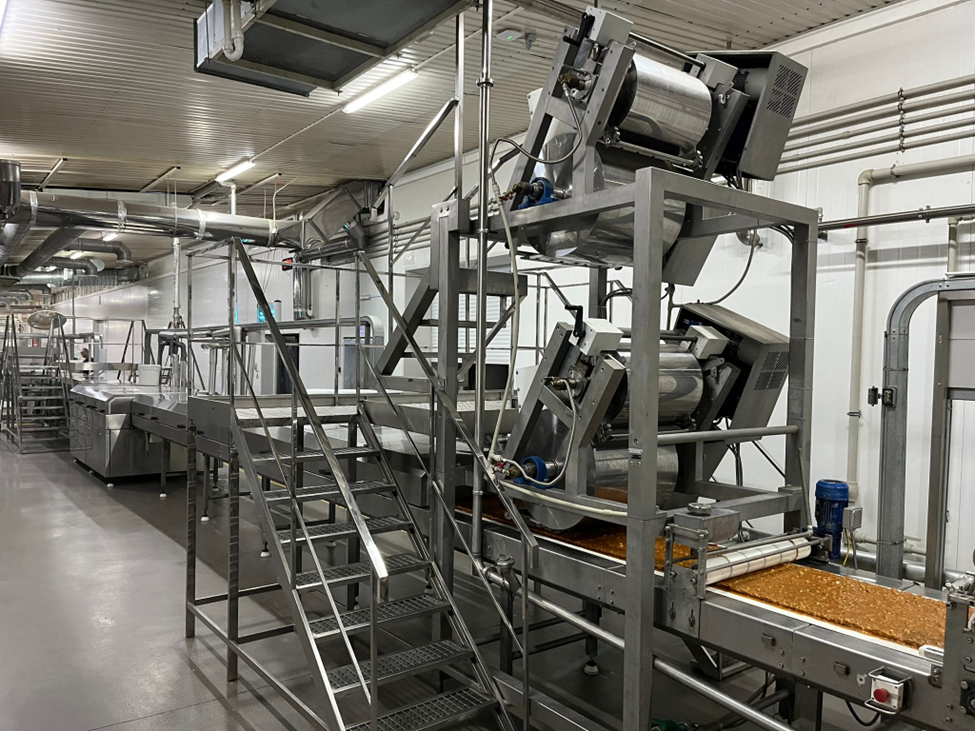
- Slab Forming Section
The prepared mixture enters the forming unit, where a continuous product slab is formed using a roller system.
At this stage, the product shape, thickness, and structure are established.
Main functions:
- formation of a uniform slab across the entire conveyor width;
- adjustable slab thickness (12–25 mm);
- automatic thickness calibration;
- possibility of applying a second layer (caramel, jelly, or fruit mass);
- possibility of adding toppings or other ingredients.
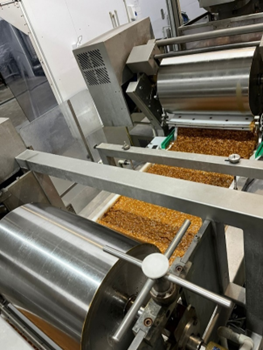
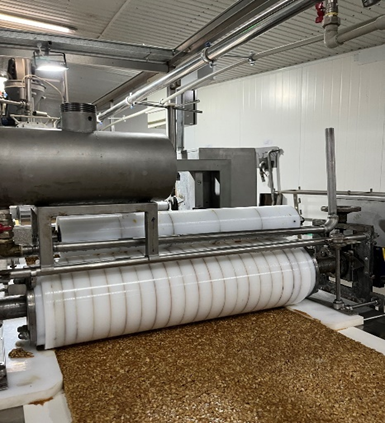
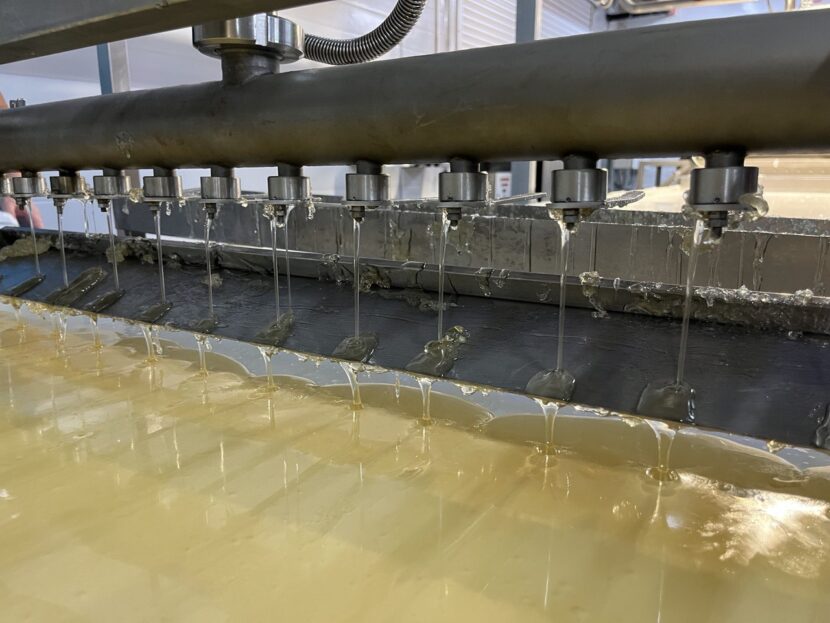
After forming, the slab is transferred to the cooling tunnel.
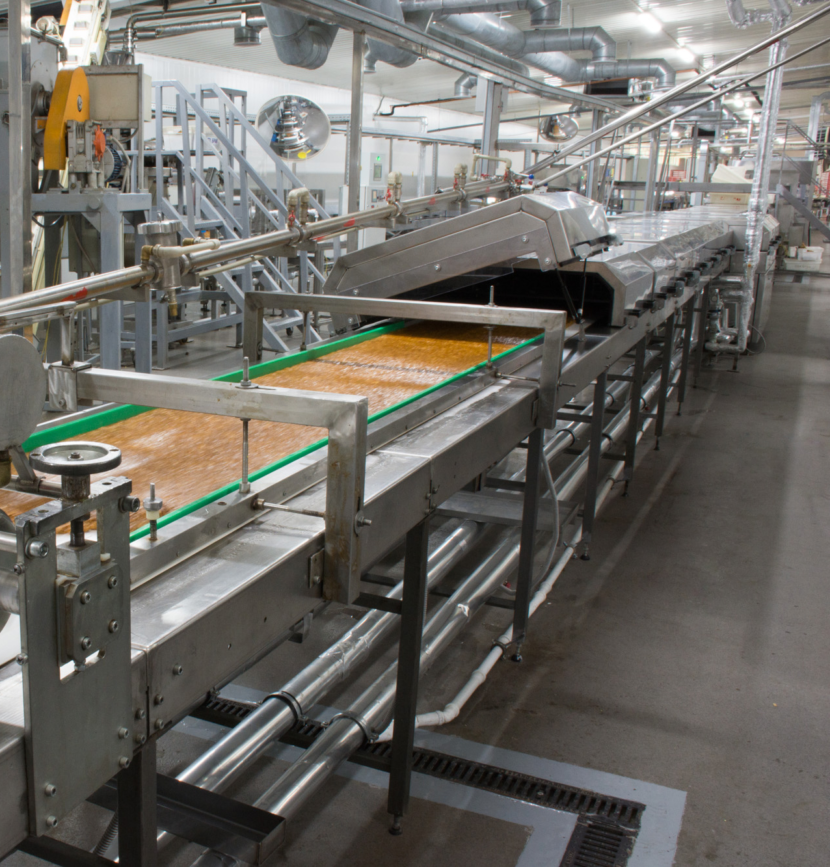
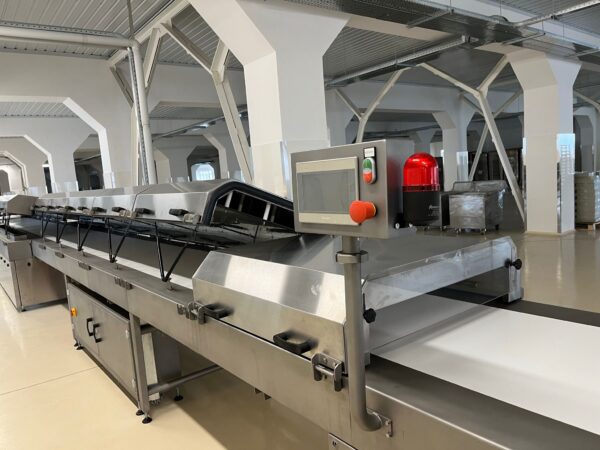
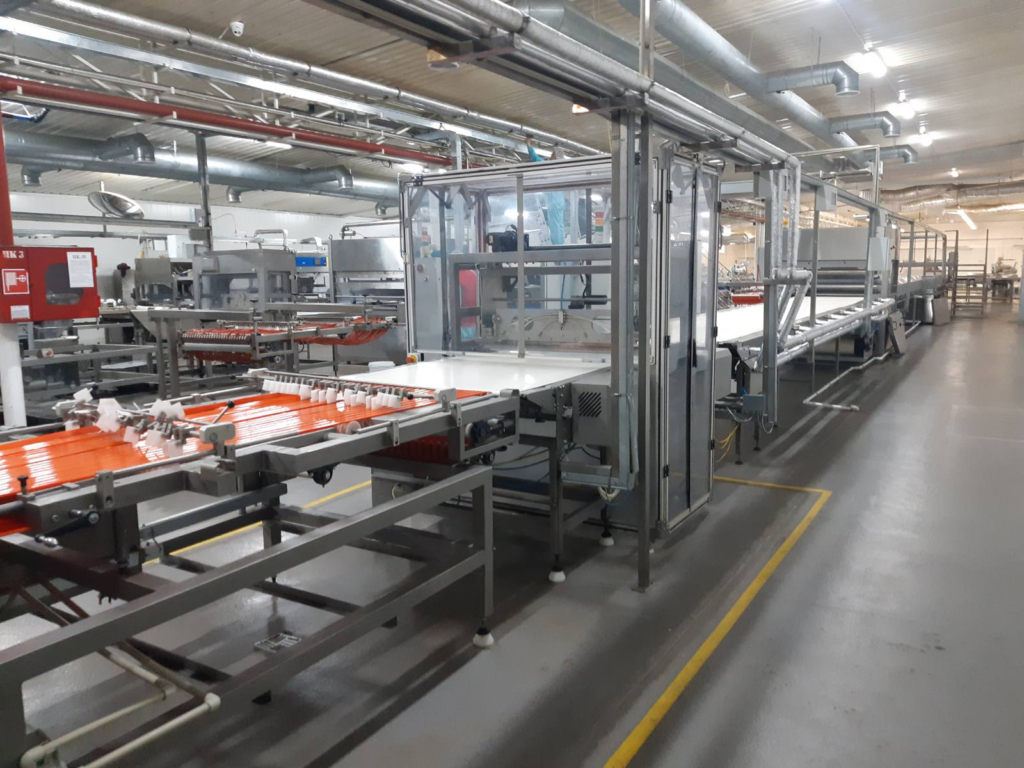
- Cooling and Structure Stabilization Section
The cooling tunnel stabilizes the product structure before cutting.
Functions:
- cooling the product to the required temperature;
- stabilizing shape and texture;
- preparing the product for further processing.
Features:
- combined cooling (air cooling + bottom cooling);
- adjustable temperature and conveyor speed;
- automatic conveyor belt centering and tensioning.
- Cutting Section
After cooling, the product slab is cut into bars of the required dimensions.
Functional features:
- longitudinal cutting into strips of the required width;
- cross-cutting into products of the required length;
- adjustment of product length without stopping the line;
- creation of gaps between products;
- knife cleaning and lubrication system.
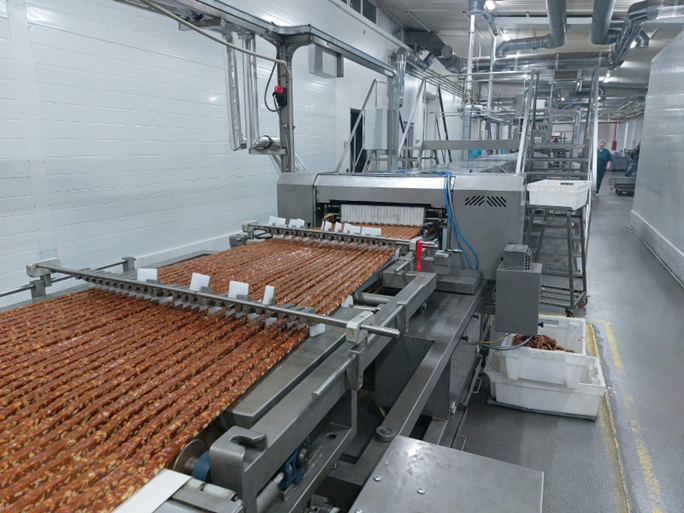
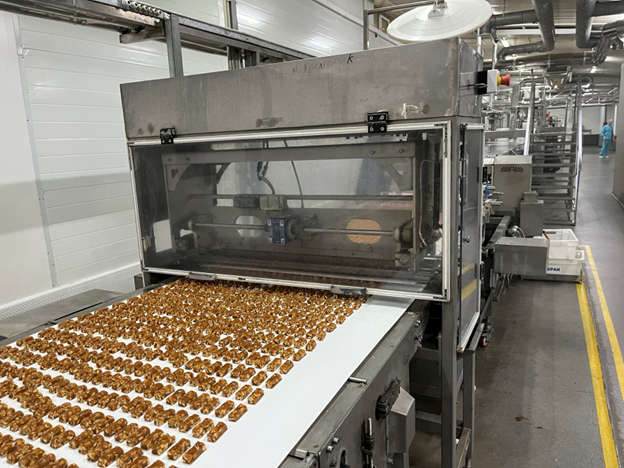
The design enables quick changeover for different product formats.
- Enrobing Section
The line can be equipped with an enrobing system for coating products with chocolate or confectionery coating.
Functional features:
- full or partial coating;
- top and bottom enrobing;
- air-blowing system for even coating distribution;
- removal of excess coating.
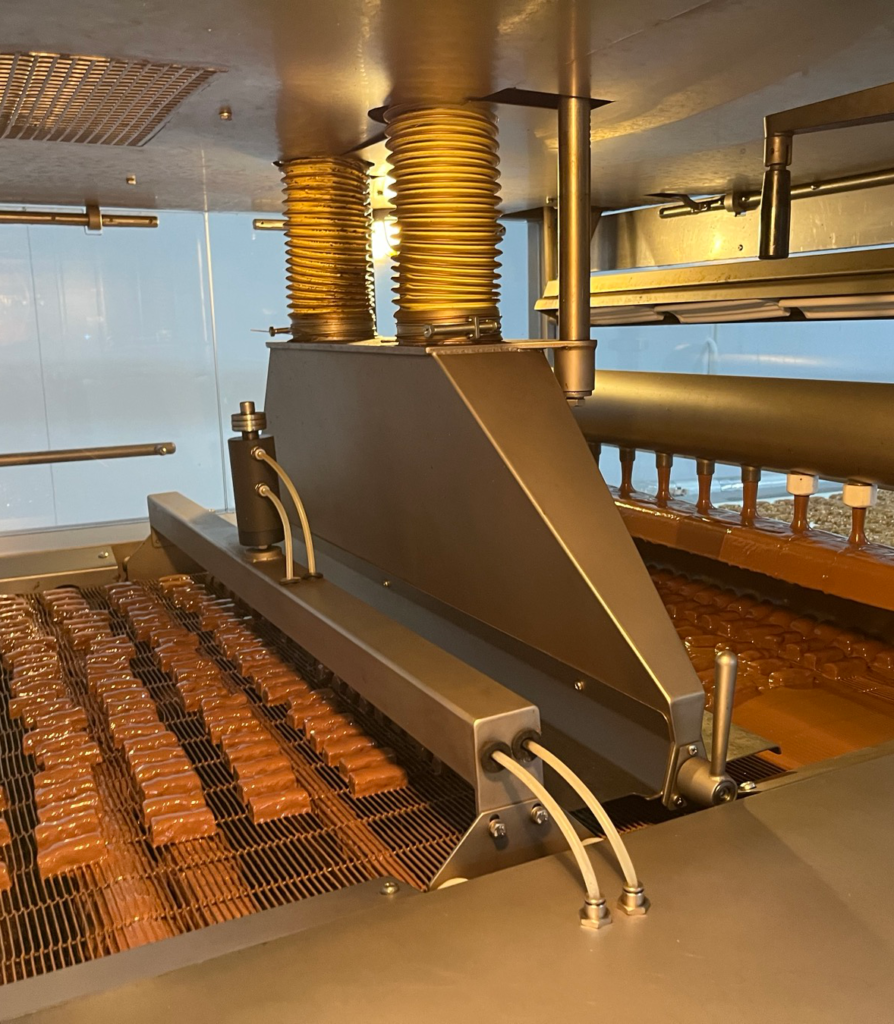
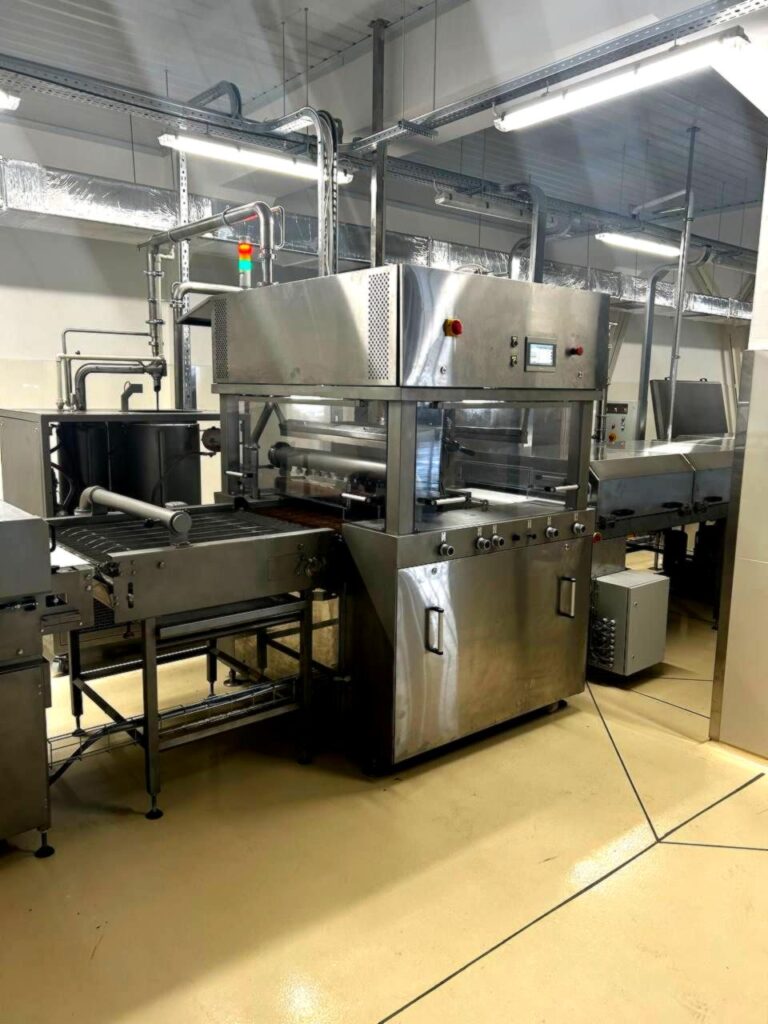
The system can process various types of confectionery coatings or chocolate (when tempering equipment is installed).
- Coating Cooling Section
After enrobing, the products pass through an additional cooling stage to stabilize the coating.
- Transfer to Packaging
Finished bars are automatically transferred to the packaging equipment.
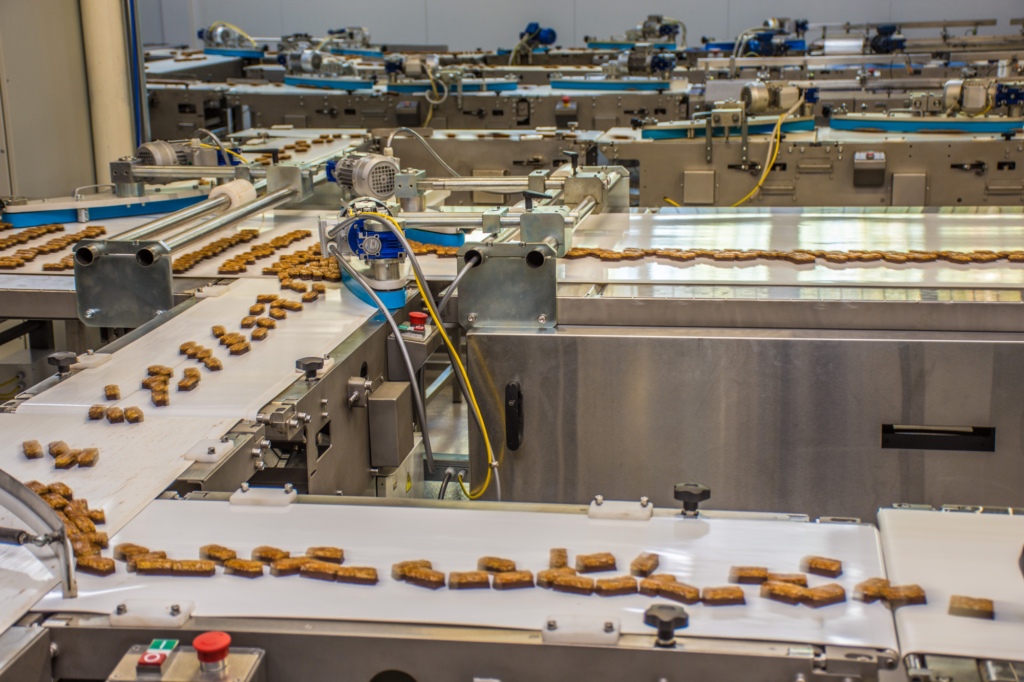
TECHNICAL SPECIFICATIONS
- Line capacity: 150–900 kg/h;
- Continuous production process;
- Operating time: 24 hours per production cycle (except for technological cleaning when processing sticky and highly viscous products);
- Number of operators: 2 (regardless of production capacity);
- Construction material: AISI 304 stainless steel;
- Automation level: according to customer requirements.
Questions left? Write to us: